Live Edge Floating Shelves in Monroe, CT
Yes, Tougas Timberworks builds custom live edge floating shelves. Eric mills the slab, kiln dries it himself, and mounts each shelf on hidden steel rods driven into your wall studs. No visible brackets. Just solid wood that looks like it grows from the wall.
One Slab, Floating on the Wall
A floating shelf is a single piece of solid wood with no bracket showing underneath. A walnut run above the range. A white oak shelf in the entry. A pair flanking the fireplace. These are small pieces that change how a wall reads, and the whole effect depends on the mounting being invisible.
You come to the Monroe shop, look at rough-cut slabs, and pick one by species, grain, and the shape of its natural edge. Then Eric cuts the shelf to the length and depth your wall needs and writes an estimate based on the actual material and the actual hours.
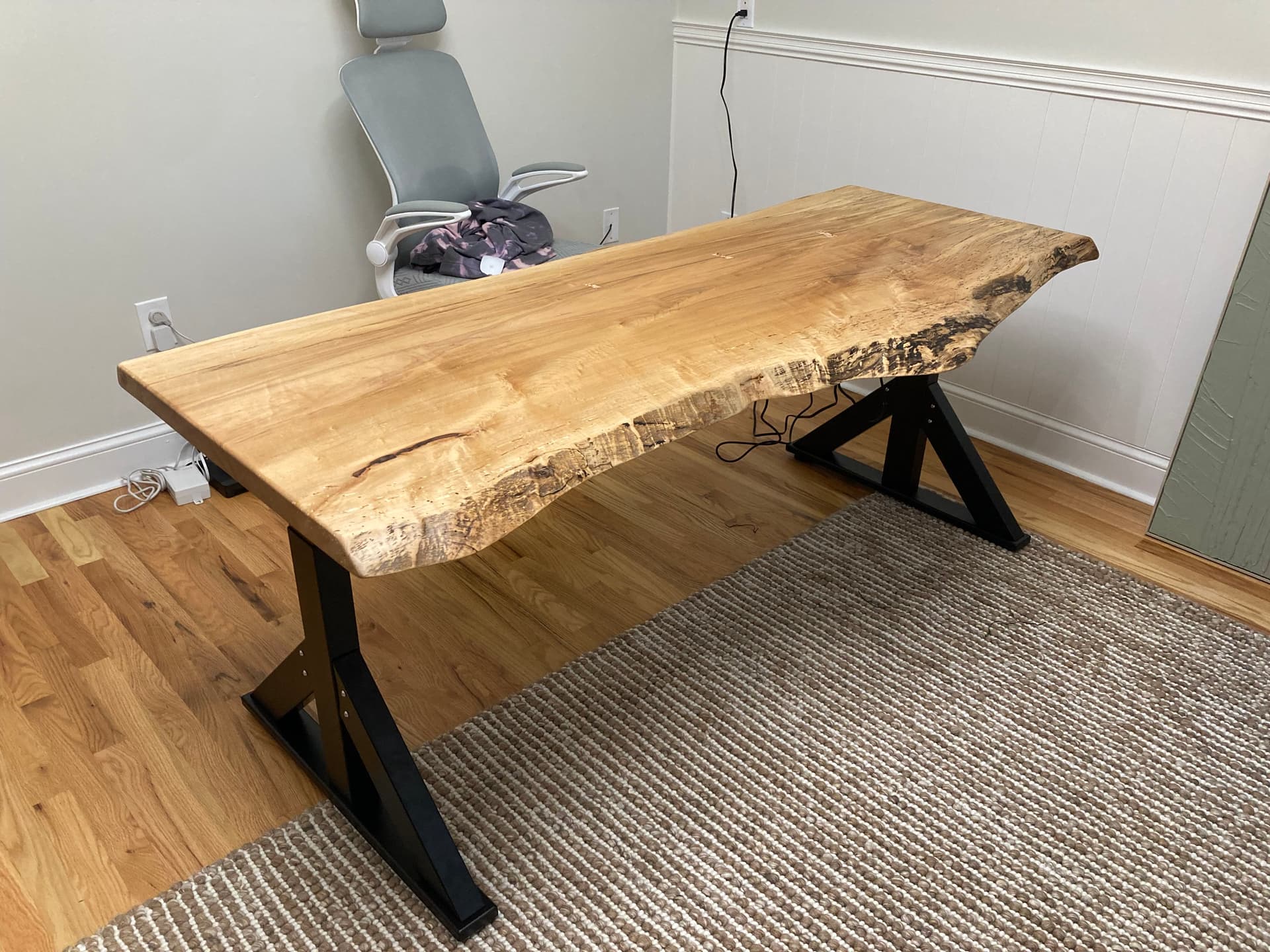
Black walnut, white oak, hard maple, cherry, and sycamore are the common species. If you want the shelves to match a mantel, a counter, or a table in the same room, Eric builds those too. See the full range on the live edge furniture page.
Get a Quote for Your Shelves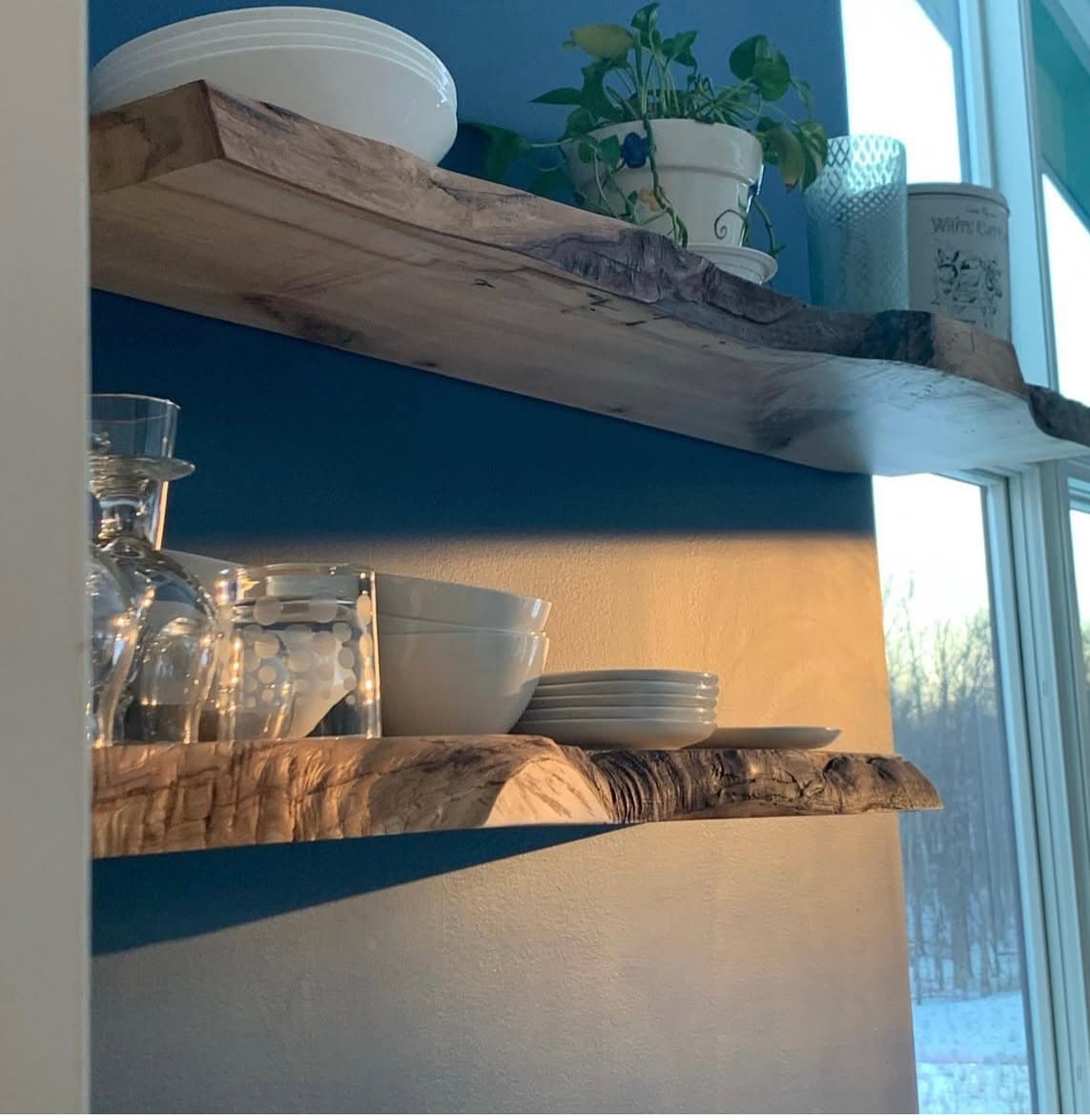
How the Hidden Steel-Rod Mount Works
The whole look of a floating shelf comes from the mount you cannot see. Eric fastens a steel floating bracket into your wall studs, then drills holes into the back edge of the shelf to match the rods. The shelf slides over the rods and sits tight against the wall. From the front and from below, you see solid wood and nothing else.
Anchoring into studs is the part that matters. The steel rods carry the load straight back into the framing, not into drywall and a plastic anchor. Eric sizes the rods and the spacing to how you plan to use the shelf, so a shelf that holds dishes is built different from one that holds light decor.
The wood is kiln dried before it ever gets mounted. Eric mills his own timber and dries it in his own iDry kiln to furniture-grade moisture content of 6 to 8 percent. That is what keeps a thin shelf flat over a kitchen instead of cupping in the first humid summer. The same stock goes into live edge mantels and live edge countertops.
A floating shelf is only as strong as what the rods land in. Mount into studs and a slab will outlast the wall. Mount into drywall and it is a matter of time.
From Shop Visit to Mounted Shelf
You reach out by phone, email, or the quote form with your wall measurements and where the shelves are going. Eric comes back with a few questions about length, depth, species, and what the shelves will hold, then invites you to the Monroe shop to see real material. That visit is free, and there is no pressure to commit.
Once you pick a slab and approve the estimate, you put 50 percent down and Eric schedules the build. The other 50 percent is due at completion. Lead time is two to three weeks. Delivery and mounting cover Fairfield County and run throughout Connecticut.
Floating Shelf Terms
- +Hidden steel-rod bracket, mounted into the studs
- +Built to custom length and depth for your wall
- +Kiln dried to 6 to 8 percent moisture content
- +Walnut, white oak, maple, cherry, sycamore
- +50% deposit to start, 50% on completion
- +2 to 3 week lead time on most projects
Want the raw slab instead? Eric sells white oak slabs kiln dried and ready. Or get in touch.
Live Edge Floating Shelf Questions
How do live edge floating shelves mount to the wall?
They mount on a hidden steel-rod floating bracket. Eric fastens a steel bracket into your wall studs, then drills matching holes into the back edge of the shelf and slides it over the rods. From the front you see solid wood and nothing else. No visible brackets, no L-supports, no hardware. The rods carry the load straight back into the framing.
How much weight can a floating shelf hold?
It depends on the shelf depth, the rod diameter, and what the rods land in. A shelf anchored with steel rods into solid studs holds far more than a typical bracket shelf. Eric sizes the rods and the mounting to how you plan to use the shelf, books and dishes versus light decor, so the support matches the load. He walks you through it before the build.
What wood species do you use for floating shelves?
Black walnut, white oak, hard maple, cherry, and sycamore are the common species. Walnut gives you dark chocolate tones, white oak runs lighter with strong grain, maple is pale and clean. You come to the Monroe shop, look at rough-cut slabs, and pick the species and the natural edge that fits your room.
Can floating shelves go in a kitchen, or only a living room?
Both. Open kitchen shelving is one of the most requested jobs, walnut or white oak runs above a counter or flanking a range hood. They also work in living rooms, entryways, offices, and bathrooms. Because every slab is kiln dried to furniture-grade moisture content, the wood stays flat whether it hangs in a humid kitchen or a dry den.
Can you make floating shelves to a custom depth and length?
Yes. Every shelf is built to your wall and your slab. You tell Eric the length you need and the depth that fits the space, and he cuts the shelf from a slab that suits it. The live edge follows the natural shape of the tree, so each shelf is its own length and profile rather than a stock size off a shelf.
How long does a floating shelf project take?
Lead time is two to three weeks from deposit to delivery for most shelf projects. A single shelf moves fast. A full kitchen run or a set across multiple rooms can take a little longer. Eric gives you a real timeline when he writes the estimate, and the work is scheduled around that, not stacked behind a queue of unrelated jobs.
Our Services
Areas We Serve
Ready to Choose Your Slab?
Come to the Monroe shop, look at the wood in person, and let Eric write you a straight estimate for your floating shelves. No commitment until you approve the number.