Live Edge River Tables in Monroe, CT
A live edge river table is two solid wood slabs with epoxy poured between their natural edges, forming a river down the center. Yes, Tougas Timberworks builds them in Monroe, CT. Eric mills the slabs, kiln dries them himself, pours the river, and finishes the top flat.
Two Slabs and a River Between Them
A river table starts with two live edge slabs, usually cut from the same log so the grain mirrors across the gap. Eric sets them apart on a flat jig, dams the edges, and pours epoxy into the channel. When it cures he sands the whole surface level, so the wood and the river finish as one solid top.
You come to the Monroe shop, look at rough-cut slabs, and pick a pair that work together by species, figure, and edge shape. The epoxy can run clear like glass or tinted to a color you choose. Eric writes an estimate based on the actual slabs, the size of the table, and the volume of the pour.
Black walnut, white oak, hard maple, cherry, and sycamore are the common species for a river top. If you are after a matching set, Eric also builds straight live edge dining tables and countertops from the same kiln-dried stock. See the full range on the live edge furniture page.
Get a Quote for Your River Table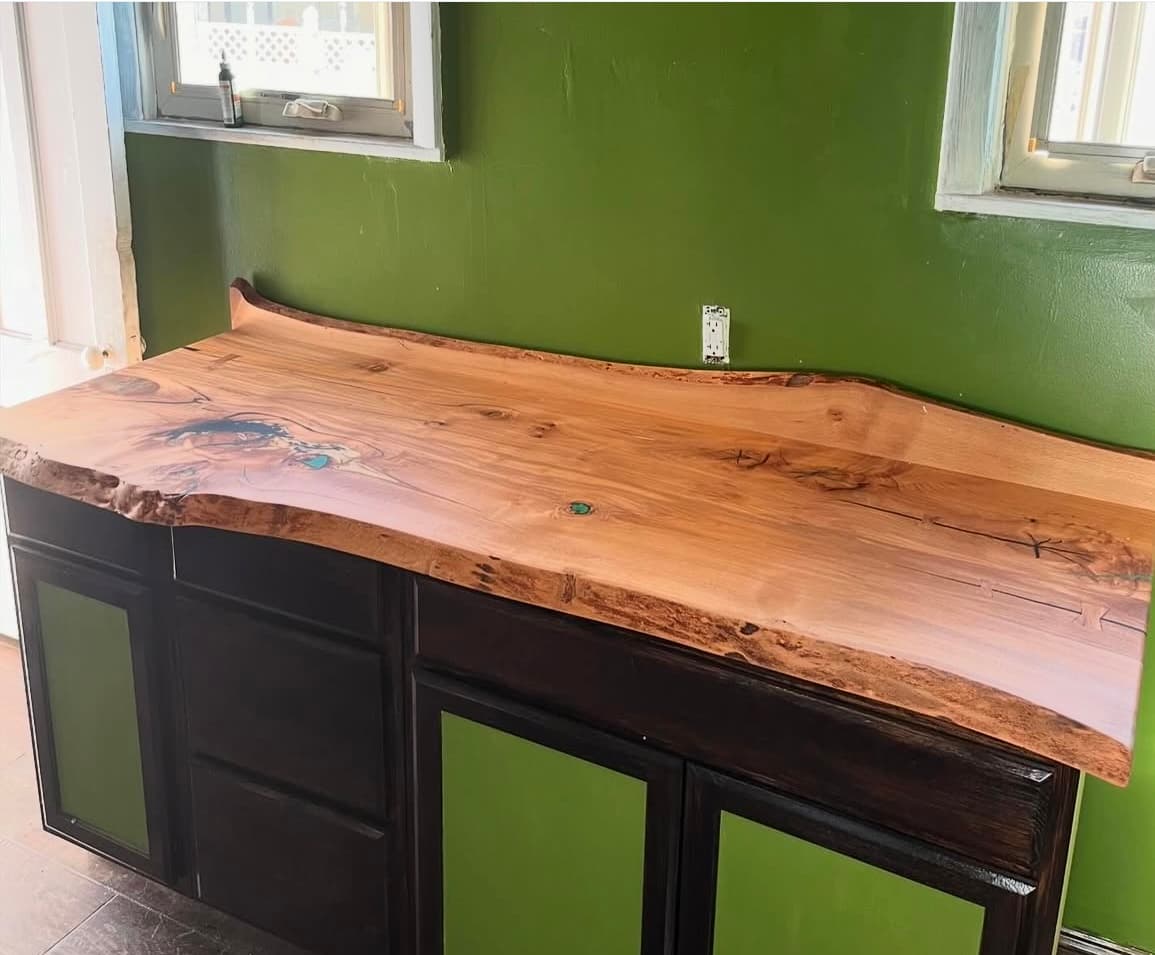
Why the Slabs Are Kiln Dried Before the Pour
Epoxy and wet wood do not get along. If a slab still carries moisture when the river is poured, the wood keeps moving after the epoxy locks it in place. That is how you get gaps along the edge of the channel, or a top that cups months after delivery. The pour is only as good as the wood it bonds to.
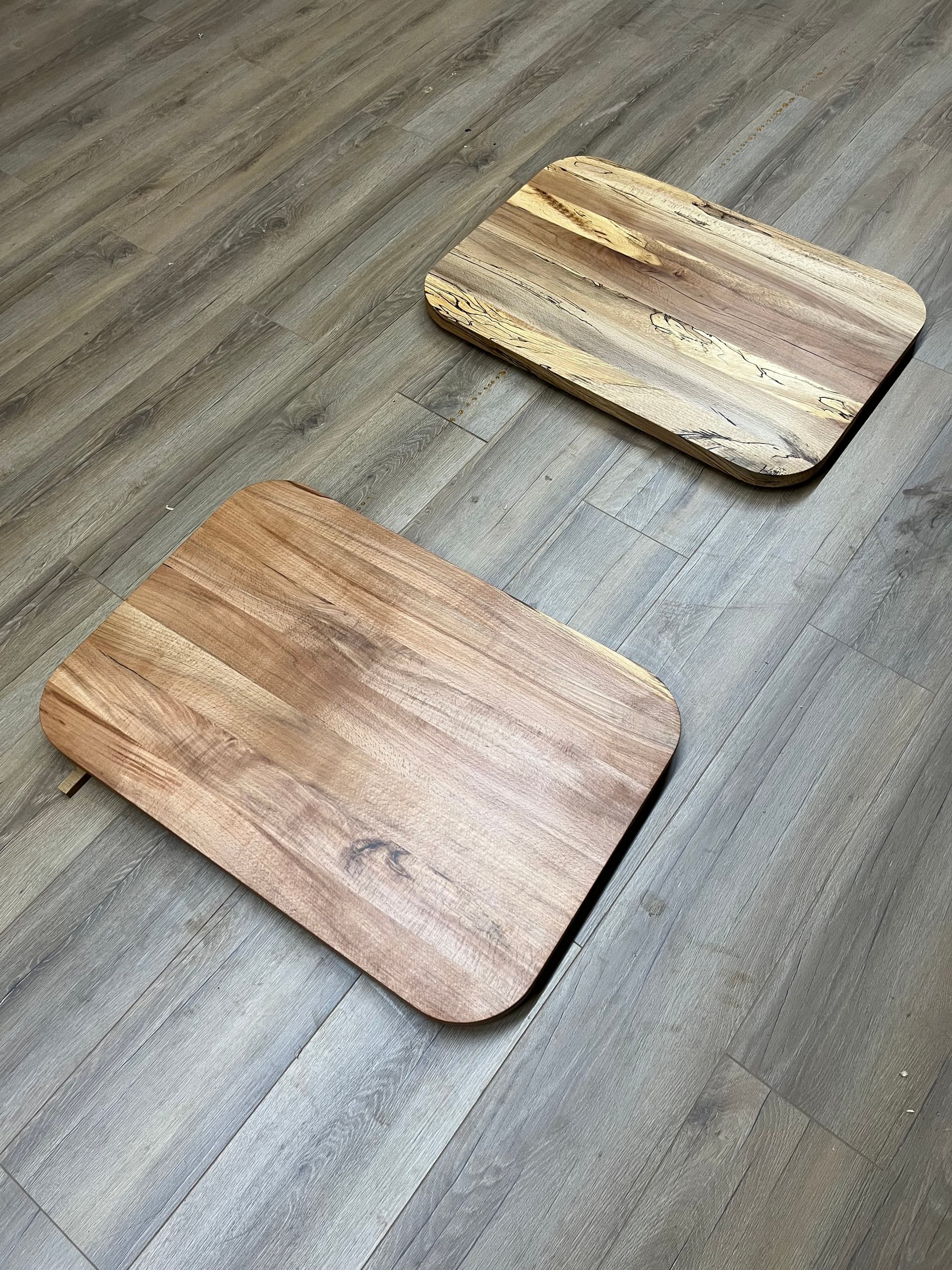
Eric mills his own timber, dries it in his own iDry kiln to furniture-grade moisture content of 6 to 8 percent, and only then builds. Because he runs the full cycle, he knows where each slab came from, how long it dried, and what moisture content it was at when it left the kiln. That is what keeps a river table flat and tight years in.
The same kiln-dried stock is sold as black walnut slabs for woodworkers and designers, and built into live edge countertops when a project calls for it.
The epoxy gets the attention, but the table lives or dies on the wood. Pour a river into a slab that is not dry and you have locked a problem under glass.
From Shop Visit to Finished Table
You reach out by phone, email, or the quote form with the size of table you want and where it will live. Eric comes back with a few questions about species, river color, and timeline, then invites you to the Monroe shop to see real slabs. That visit is free, and there is no pressure to commit.
Once you pick your slabs and approve the estimate, you put 50 percent down and Eric schedules the build. The other 50 percent is due at completion. Lead time is two to three weeks. Delivery covers Fairfield County and runs throughout Connecticut.
River Table Terms
- +Two matched live edge slabs with an epoxy river
- +Clear or tinted epoxy, your color choice
- +Kiln dried to 6 to 8 percent before the pour
- +50% deposit to start, 50% on completion
- +2 to 3 week lead time on most projects
- +Delivery in Fairfield County and beyond
Ten minutes from Newtown. See the Newtown work or get in touch.
Live Edge River Table Questions
What is a live edge river table?
A river table is two live edge slabs set apart with epoxy poured into the gap between them. The epoxy forms a band that runs the length of the table like a river between two banks. Eric matches the natural edges of the wood so the grain flows into the pour, then sands and finishes the whole top flat. The result is a single solid surface, part wood, part clear or tinted epoxy.
What epoxy colors can I choose?
The epoxy can run clear so it reads like glass over the wood, or it can be tinted to a color you pick. Deep blue, teal, charcoal, and smoke are common, but the choice is yours. Clear and lightly tinted pours show the live edges and any depth in the channel. Heavier tints read more like a solid band. Eric walks you through samples before the pour so you see what each option looks like over your actual slab.
Are river tables durable and food safe?
A finished river table holds up to daily use for years. Eric seals the surface so it resists water, stains, and normal wear, and the top can be cleaned with a damp cloth. The finish is built for furniture that gets used, including dining surfaces. As with any wood and epoxy top, use a board for cutting and a trivet for hot pans, and avoid standing water. The surface can be refreshed down the road if it ever needs it.
Can a river table be a dining table or a coffee table?
Both. River tables work as dining tables, coffee tables, conference tables, consoles, and desks. The build is the same idea at any size. A coffee table uses a shorter slab and a lower base. A dining or conference table needs longer matched slabs and a base sized to seat people comfortably. Tell Eric the room and how you will use it, and he sizes the slabs and the river to fit.
How long does a live edge river table take?
Lead time is two to three weeks from deposit to delivery for most tables. The epoxy pour and the cure add time to the build, so larger tables with deep pours can run longer. Eric gives you a real timeline when he writes the estimate, and the work is scheduled around that, not stacked behind a queue of unrelated jobs.
What drives the cost of a river table?
Size, species, slab matching, and the volume of epoxy in the pour are the main factors. A small coffee table with a narrow river uses far less material than a long dining table with two wide matched slabs and a deep channel. Eric writes a detailed estimate after he sees the slabs and the dimensions, so the number reflects the actual material and the actual hours, not a guess.
Our Services
Areas We Serve
Ready to Pour Your River?
Come to the Monroe shop, look at the slabs in person, pick your river color, and let Eric write you a straight estimate. No commitment until you approve the number.